Intuitive Surgical Hit by Phishing Attack — Employee Credentials Stolen, Customer and Corporate Data Exposed
Intuitive Surgical, the maker of da Vinci robotic surgical systems, has disclosed a targeted phishing attack that compromised an employee's credentials and allowed unauthorized access to its internal administrative network. Employee records and limited customer business and contact information were accessed — but the company's surgical platforms and hospital networks were not affected, due to network segmentation that held.
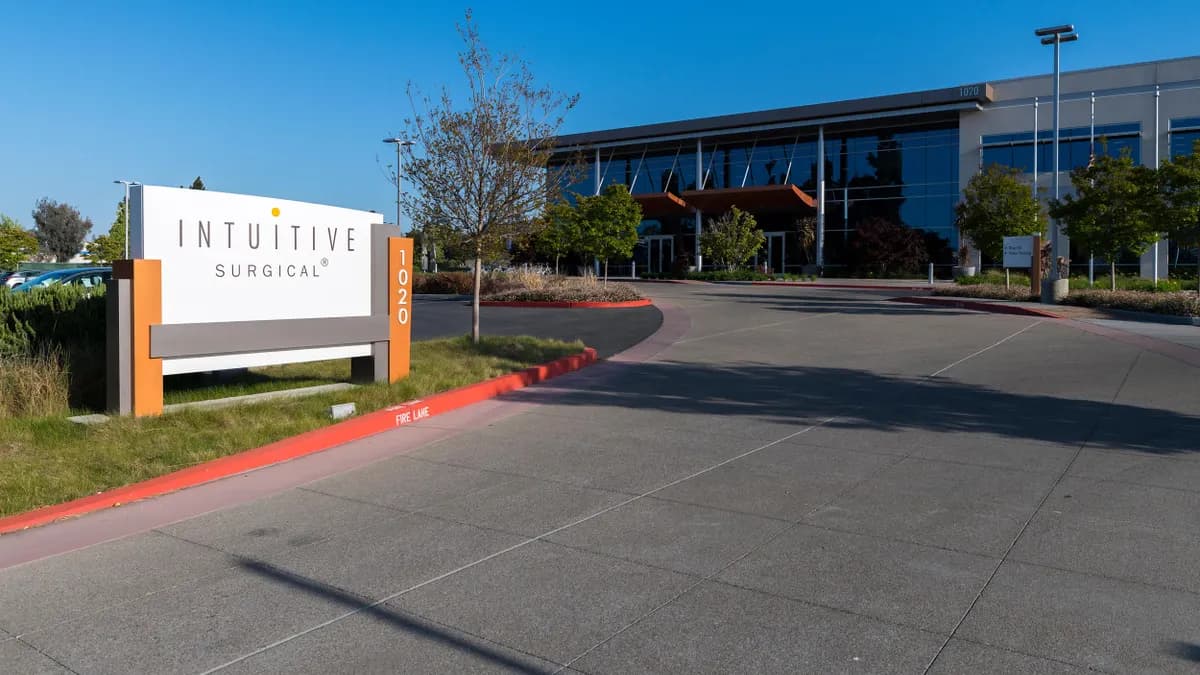
Intuitive Surgical (NASDAQ: ISRG), the $180 billion medical technology company behind the da Vinci and Ion robotic surgical platforms, disclosed on March 12, 2026 that it was the victim of a targeted phishing cyberattack that resulted in the theft of an employee's credentials and unauthorized access to its internal business administrative network.
The breach exposed employee records, corporate data, and limited customer business and contact information. Critically, the company confirmed that no patient data was accessed and that its surgical robotic platforms, manufacturing infrastructure, and hospital customer networks were entirely unaffected — protected by network segmentation that successfully contained the intrusion to the corporate IT layer.
What Happened
The attack followed a textbook business email compromise (BEC) / spear-phishing sequence:
- Phishing delivery: A targeted phishing message was sent to at least one Intuitive Surgical employee, crafted to impersonate a trusted internal or external service.
- Credential harvesting: The employee interacted with the phishing payload, resulting in the theft of their account credentials.
- Internal network access: The attacker used the stolen credentials to authenticate into Intuitive's internal administrative network applications — bypassing perimeter controls because the login appeared legitimate.
- Data access: The unauthorized session was used to access employee records, corporate data, and a limited set of customer business and contact information.
- Detection and containment: Intuitive discovered the intrusion and secured the affected applications. A comprehensive security review was initiated.
No ransomware deployment, destructive payload, or lateral movement into clinical or manufacturing environments was confirmed.
What Was Compromised
| Category | Status | Notes |
|---|---|---|
| Employee records | Accessed | HR data, corporate personnel information |
| Customer business info | Accessed | Business contact details, not patient or clinical data |
| Corporate data | Accessed | Internal administrative data |
| Patient data | Not affected | Never in scope; no clinical data flows through corporate admin systems |
| da Vinci / Ion platforms | Not affected | Operate on isolated, segmented networks |
| Hospital IT networks | Not affected | Managed independently by hospital customers |
| Manufacturing infrastructure | Not affected | Segmented from business IT network |
Intuitive has stated that impacted customers and employees are being notified in accordance with applicable legal and regulatory requirements.
Why the Surgical Platforms Were Safe
The detail that draws immediate attention is that a breach of the company that makes robotic surgical systems did not touch those systems at all. This is not luck — it reflects a deliberate architecture.
Intuitive's product infrastructure (da Vinci, Ion, and associated digital platforms) operates under strict network segmentation, isolated from the corporate business applications affected in this incident. The two environments share no logical path:
- Corporate administrative systems handle HR, CRM, partner portals, and internal communication tools
- Surgical platform networks are dedicated operational technology (OT) environments, governed by separate access controls, not connected to employee email or identity systems
This is exactly the architecture guidance from CISA and the FDA's medical device cybersecurity frameworks — air-gap or hard-segment clinical OT environments from enterprise IT. In this case, that architecture prevented what could have been a catastrophic patient-safety incident from becoming one.
Simultaneous Attack on Stryker
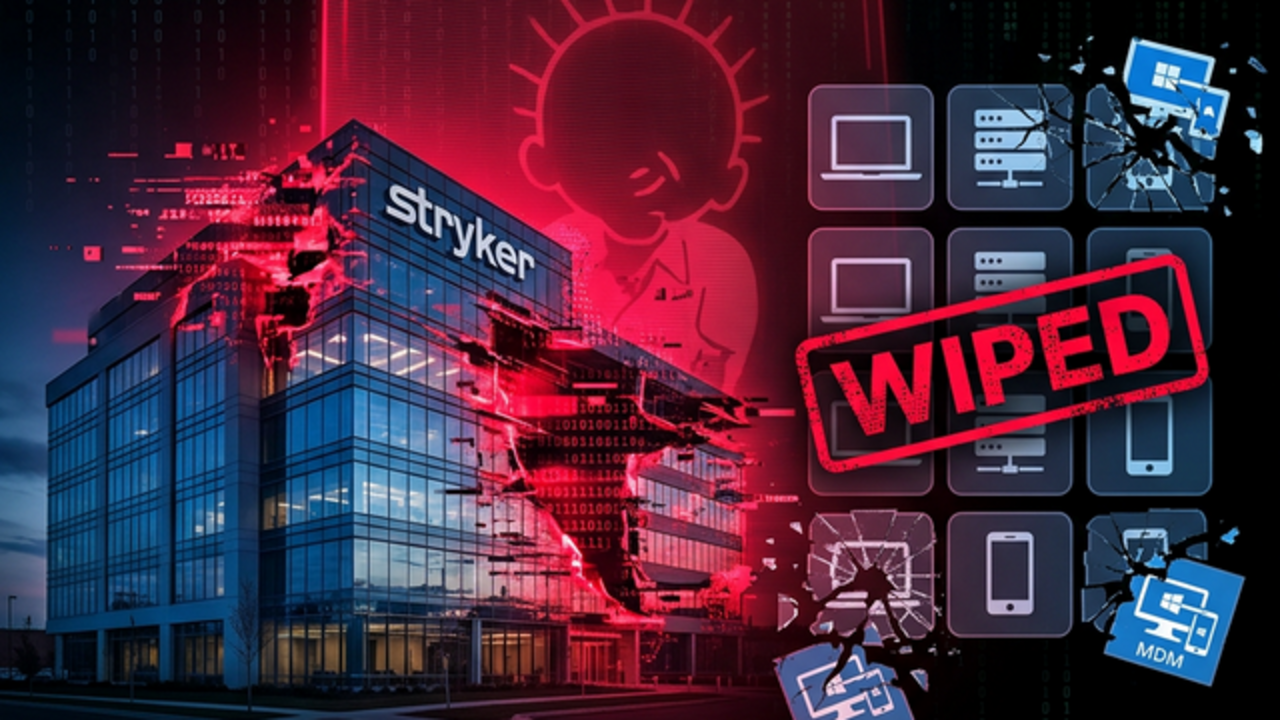
The Intuitive incident did not occur in isolation. On March 11, 2026, rival medical technology firm Stryker Corporation was hit by the Iran-linked threat group Handala, which launched a destructive attack that disrupted Stryker's Microsoft environment and affected global manufacturing operations. Stryker filed an SEC 8-K (Item 1.05) material cybersecurity incident disclosure the same day.
The near-simultaneous targeting of two of the world's largest surgical technology companies — within 24 hours of each other — points to a deliberate focus on the medtech sector rather than coincidental timing. Whether the Intuitive incident is linked to the same campaign or threat actors as the Stryker attack has not been publicly confirmed.
Why Healthcare and Medtech Are Persistent Targets
The economics of attacking healthcare organizations are uniquely favorable for threat actors:
- Patient and employee records fetch a premium on dark web markets — healthcare PII commands 5–10x the price of standard financial data due to its immutability (you can change a credit card; you cannot change a date of birth)
- Operational sensitivity creates leverage: hospitals and medtech firms face regulatory, reputational, and patient-safety pressure to resolve incidents quickly, making them more likely to pay ransoms
- Complex supply chains — Intuitive's customer base includes thousands of hospitals worldwide, making stolen customer contact data a potent launchpad for secondary spear-phishing campaigns impersonating Intuitive's support teams
- Legacy and segmented infrastructure creates uneven security postures across the enterprise
The Intuitive breach illustrates that even a company with robust product-side security can be compromised at the identity layer through a single employee credential.
Technical Analysis: Phishing as the Sole Entry Point
This incident is a textbook example of why identity is the new perimeter. The attacker:
- Did not exploit a software vulnerability
- Did not breach a third-party vendor's system to pivot in
- Did not need to defeat endpoint protection or network intrusion systems
They sent an email. One employee clicked. The attacker had valid credentials.
Phishing-resistant MFA (FIDO2 / hardware security keys such as YubiKey) would have neutralized this attack entirely — a stolen password is useless without the physical token. Standard TOTP or SMS-based MFA is susceptible to real-time phishing via adversary-in-the-middle (AiTM) proxy toolkits like Evilginx2 or Modlishka, which intercept the MFA code in transit.
AiTM Phishing Flow (How TOTP MFA Fails)
Attacker spins up reverse proxy at: login-intuitive-support[.]com
                │
                ▼
Employee visits fake URL, enters credentials + TOTP code
                │
Proxy relays request in real time to: login.intuitive.com
                │
Proxy captures session cookie before forwarding to victim
                │
Attacker has valid session cookie — bypasses MFA entirely
FIDO2/WebAuthn is origin-bound — the cryptographic challenge includes the exact domain, so a proxy to a different domain causes authentication to fail at the hardware level. No credentials travel across the wire.
Detection: Hunting for Phishing-Derived Credential Abuse
Azure AD / Entra ID (KQL — Sentinel / Defender XDR)
Detect successful logins from unexpected geolocations or IP reputation mismatches following a phishing-window timeframe:
SigninLogs
| where TimeGenerated > ago(14d)
| where ResultType == 0
| extend ParsedIP = tostring(IPAddress)
| summarize
    LoginCount = count(),
    Locations = make_set(Location),
    UserAgents = make_set(UserAgent)
    by UserPrincipalName, ParsedIP
| where array_length(Locations) > 2
    or LoginCount > 50
| order by LoginCount desc
Impossible travel detection — flag logins from two locations within an implausible time window:
let threshold_minutes = 60;
SigninLogs
| where ResultType == 0
| summarize
    Locations = make_list(pack("time", TimeGenerated, "loc", Location, "ip", IPAddress))
    by UserPrincipalName
| mv-expand Locations
| sort by UserPrincipalName asc, todatetime(Locations.time) asc
| serialize
| extend
    PrevTime = prev(todatetime(Locations.time)),
    PrevLoc = prev(tostring(Locations.loc)),
    PrevUser = prev(UserPrincipalName)
| where UserPrincipalName == PrevUser
    and tostring(Locations.loc) != PrevLoc
    and datetime_diff("minute", todatetime(Locations.time), PrevTime) < threshold_minutes
| project UserPrincipalName, PreviousLocation = PrevLoc, CurrentLocation = Locations.loc, TimeDiff = datetime_diff("minute", todatetime(Locations.time), PrevTime)
Email Gateway (Hunting Spear-Phishing Infrastructure)
EmailEvents
| where TimeGenerated > ago(30d)
| where DeliveryAction == "Delivered"
| where SenderFromDomain !in~ ("intuitive.com", "intuitivesurgical.com")
| where Subject has_any ("invoice", "security alert", "password", "MFA", "verification", "account")
    or SenderFromAddress has_any ("intuitive", "isrg", "davinci", "surgical")
| project TimeGenerated, SenderFromAddress, SenderFromDomain, RecipientEmailAddress, Subject, NetworkMessageId
Immediate Response Checklist for Intuitive Customers
Organizations that have business relationships with Intuitive Surgical — particularly hospital procurement contacts, service contract holders, or technology integration partners — should treat any incoming communication appearing to be from Intuitive Support with heightened scrutiny.
Secondary Phishing Risk: The stolen customer contact data creates a ready-made targeting list for follow-on social engineering. Attackers now potentially know which hospitals use Intuitive systems, who the technical or procurement contacts are, and how to craft convincing impersonation lures.
Immediate Actions for Intuitive Customers:
  - Verify any incoming Intuitive support request via known phone numbers (not numbers in the email)
  - Do not click links in unsolicited emails claiming to be from Intuitive Surgical
  - Alert your security operations team to increase scrutiny on inbound email from intuitive.com lookalike domains
  - Review your Intuitive portal access logs for unauthorized sessions
  - Confirm your integration service accounts for da Vinci / Ion connectivity are using MFA
Lookalike Domain Patterns to Watch
Attackers with stolen customer contact lists commonly register typosquatted domains to continue campaigns:
| Suspicious Pattern | Example |
|---|---|
| Hyphenated brand | intuitive-surgical-support[.]com |
| TLD swap | intuitivesurgical[.]net / [.]io |
| Subdomain abuse | support.intuitive-portal[.]com |
| Character substitution | intuit1ve[.]com, intuitlve[.]com |
Check your DNS/proxy logs for any internal systems resolving these patterns.
Broader Hardening Recommendations
1. Deploy Phishing-Resistant MFA Everywhere
Replace TOTP and SMS MFA with FIDO2 hardware tokens (YubiKey 5 series, Google Titan Key) or Windows Hello for Business / Apple Passkeys for all employees with access to administrative systems. This is the single highest-impact control against credential phishing.
# Enforce FIDO2-only MFA policy in Entra ID (via Graph API)
# Requires Authentication Methods Policy: FIDO2 SecurityKey enforced for all users
# SMS/TOTP methods disabled for admin-tier accounts

# Check current MFA registration status for all users
az ad user list --query "[].{UPN:userPrincipalName}" --output tsv | while read upn; do
    az rest --method GET \
      --uri "https://graph.microsoft.com/v1.0/users/$upn/authentication/methods" \
      --query "value[].{Type:'@odata.type'}" 2>/dev/null
done
2. Implement Conditional Access Policies
Block logins that fail risk scoring — require step-up authentication for any login from:
- An unmanaged or non-compliant device
- A new IP address not seen in the past 30 days
- A location outside of a defined trusted geography
- An anonymizing network (Tor, VPN exit nodes with poor reputation)
3. Privileged Access Workstations (PAWs)
Administrative access to internal business systems should require a dedicated, hardened device — not a general-use workstation that also receives email and browses the web. Separating the device used for privileged access from the device used for communication eliminates the primary phishing kill chain.
4. Email Security Hardening
| Control | Benefit |
|---|---|
| DMARC (p=reject) | Prevents domain spoofing for outbound; protects customers from impersonation |
| Anti-phishing simulation | Regular user testing to identify susceptible employees before attackers do |
| Attachment sandboxing | Detonates suspicious attachments in isolated VM before delivery |
| Link rewrite + time-of-click analysis | Scans URLs at click-time, not just delivery time — catches delayed phishing pages |
Key Takeaways
- One phishing email. One credential. One breach. Intuitive Surgical's incident underscores that no amount of product security prevents a business network compromise if identity hygiene is weak.
- Network segmentation worked exactly as designed. Surgical platforms, hospital networks, and manufacturing were never in scope. This is the right architecture for medical technology companies — and the bar every medtech firm should be held to.
- The stolen customer contact data is a secondary attack surface. Hospitals and procurement contacts in Intuitive's network should expect follow-on spear-phishing campaigns impersonating Intuitive support in the coming weeks.
- FIDO2 MFA is no longer optional for medtech. SMS and TOTP MFA are bypassed by AiTM phishing proxies in real time. Hardware security keys are the only phishing-resistant control that would have stopped this attack at the authentication layer.
- Healthcare sector targeting is escalating. Two major medtech firms — Intuitive Surgical and Stryker — were attacked within 24 hours of each other. Security teams in this sector should treat this as a campaign signal, not coincidence.
Intuitive Surgical's disclosure confirms affected parties are being notified. Customers with active service or integration relationships should contact their Intuitive account representative through verified channels to confirm the scope of any data included in the breach.
Tags
Related_Intelligence_Nodes
Stryker Wiper Attack — Iran-Linked Handala Group Weaponizes Microsoft Intune to Mass-Wipe 200,000+ Devices Across 79 Countries